The Rural Electrification Act of 1936: Why It Mattered, the Case Law It Spawned, and Why It Still Matters Today
By Arjan Bir Sodhi
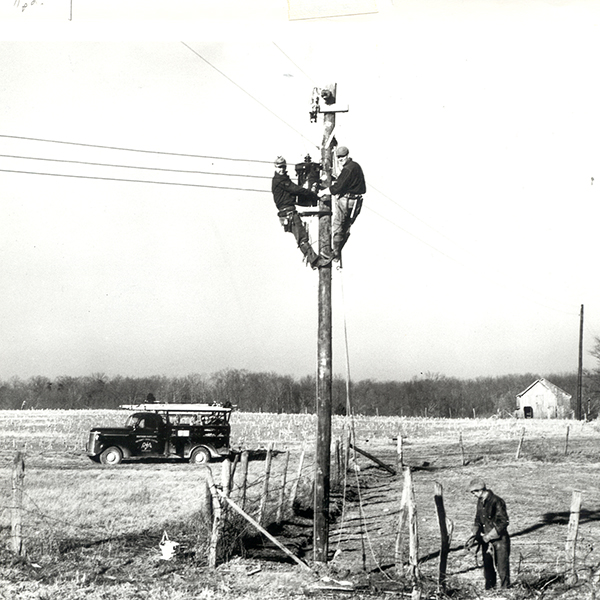
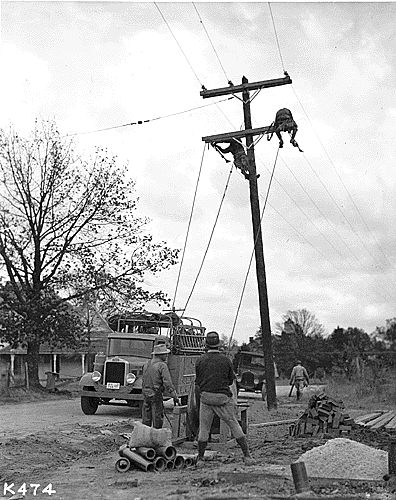
Photo credit: National Rural Electric Cooperative Association (NRECA), via Cooperative.com.
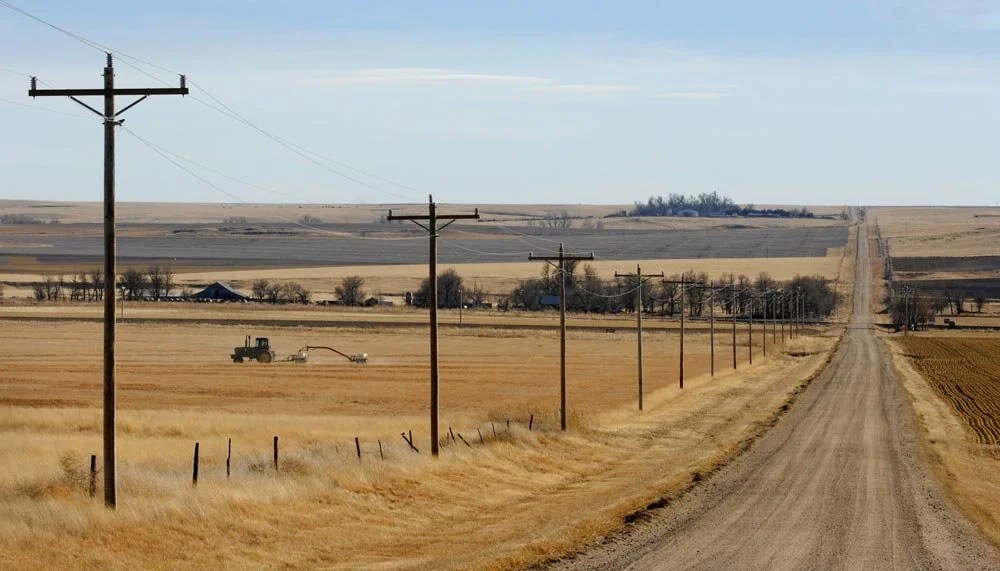
Photo credit: Southwest Iowa Rural Electric Cooperative.
The Rural Electrification Act of 1936 (REA) was one of the most transformative pieces of New Deal legislation, not because it created a flashy new right, but because it quietly reshaped everyday life in rural America. Before its enactment, electricity was overwhelmingly an urban luxury. In the mid-1930s, roughly ninety percent of urban households had electricity, while fewer than ten percent of rural homes did. Private utilities considered rural electrification unprofitable due to sparse populations and high infrastructure costs. The REA was Congress’s direct response to that market failure.
What the Act Did and Why It Was Necessary
The REA authorized the federal government to provide low-interest, long-term loans to states, municipalities, and newly formed rural electric cooperatives to finance the construction of electrical distribution systems in rural areas. Instead of nationalizing utilities, Congress opted for a cooperative model that relied on local ownership and federal financing. This structure reflected New Deal pragmatism: the federal government supplied capital and oversight, while local communities built and operated the systems.
The impact was immediate and dramatic. Within a decade, millions of rural homes gained access to electricity. This altered agricultural productivity, household labor, public health, education, and rural economic development. Electrification mechanized farming, enabled refrigeration and modern medical equipment, and narrowed the quality-of-life gap between rural and urban America.
The Constitutional and Administrative Law Questions
Although the REA was widely popular, it did not escape legal challenge. Opponents argued that the Act exceeded Congress’s constitutional authority and improperly involved the federal government in local utility matters. These challenges typically rested on Tenth Amendment and federalism concerns, as well as claims that the program went beyond Congress’s power under the Spending Clause and Commerce Clause.
The Supreme Court, however, consistently rejected those arguments.
Major Case Law Interpreting the REA
The most important case is Tennessee Electric Power Co. v. Tennessee Valley Authority, 306 U.S. 118 (1939). Although not limited solely to the REA, the case addressed the broader New Deal electrification framework, including federal competition with private utilities. Private power companies argued that federal involvement in electricity generation and distribution unlawfully interfered with their business interests and violated constitutional limits on federal power.
The Court dismissed those claims, holding that economic competition resulting from lawful federal action does not create a justiciable injury. Crucially, the Court reaffirmed that when Congress acts pursuant to its enumerated powers, particularly through spending and economic regulation, incidental effects on private enterprise do not render the action unconstitutional. This reasoning indirectly insulated the REA from constitutional attack and signaled judicial deference to New Deal infrastructure programs.
Another important line of cases involved challenges to the Rural Electrification Administration’s lending authority and administrative discretion. In cases such as Alabama Power Co. v. Ickes, 302 U.S. 464 (1938), private utilities attempted to block federal loans to municipalities and cooperatives. The Supreme Court held that utilities lacked standing because they suffered no legal injury, only competitive disadvantage. This standing analysis became foundational in later administrative law jurisprudence and reinforced the federal government’s ability to pursue large-scale economic programs without constant judicial interference.
Long-Term Legal and Structural Impact
The REA’s legal legacy extends far beyond electricity. It helped normalize three ideas that remain central to modern constitutional and administrative law. First, it confirmed that Congress may use its spending power to address market failures, even when the regulated activity is traditionally local in nature. Second, it reinforced the principle that federal economic programs are entitled to judicial deference when grounded in enumerated powers. Third, it strengthened standing doctrine by clarifying that competitive harm alone is insufficient to challenge federal action.
Institutionally, the REA evolved into today’s Rural Utilities Service, which continues to finance rural infrastructure, including broadband and telecommunications. Modern federal broadband initiatives rely on the same cooperative-lending model pioneered by the REA, and courts continue to cite New Deal electrification cases when evaluating the scope of federal infrastructure authority.
Why the REA Still Matters Today
In contemporary debates over broadband access, renewable energy grids, and infrastructure spending, the REA serves as both a legal and policy blueprint. It demonstrates how federal power can be exercised without commandeering states or nationalizing industries, while still achieving nationwide structural change. Courts reviewing modern infrastructure statutes often rely, explicitly or implicitly, on the constitutional settlement forged during the REA era.
The Rural Electrification Act of 1936 is therefore more than a historical artifact. It is a cornerstone of modern federal governance, illustrating how constitutional authority, administrative discretion, and economic necessity can converge to produce lasting social transformation.

